


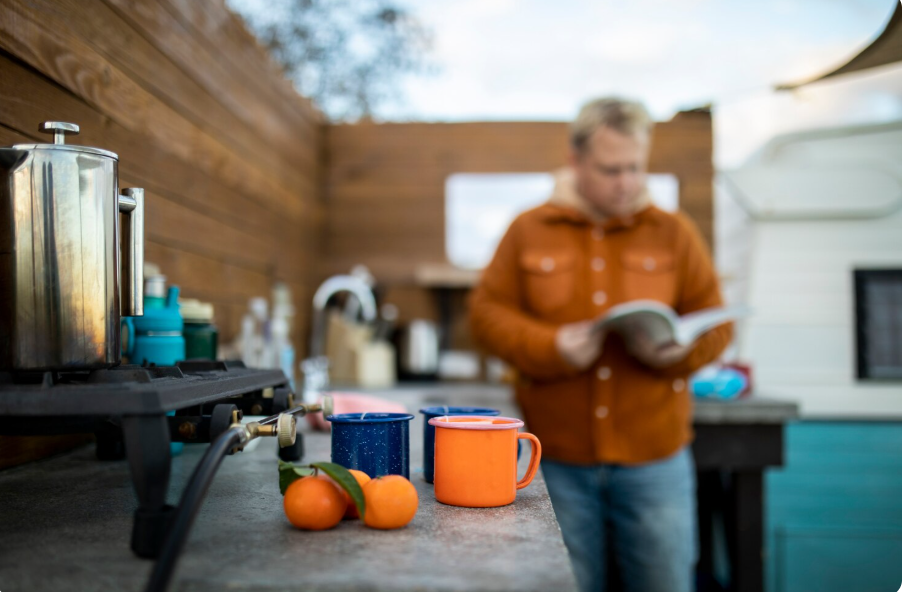
Nobody plans a backyard gathering and thinks the kitchen will be the problem. The focus goes on seating, lighting, maybe a speaker setup. Then the evening actually happens and the host disappears for most of it — running inside to prep, coming back out to cook, returning again for a forgotten ingredient, and somewhere in all that movement, missing the part of the night they were supposed to be enjoying. Alfresco kitchens exist to solve a problem that most people do not identify correctly until they have already thrown a dozen parties and wondered why hosting feels like so much work.
Hosts Stop Being Absent
The most underappreciated thing a properly designed outdoor kitchen does is give the host their evening back. When everything needed to cook, serve, and clean up exists in the same outdoor space as the gathering, the host stops vanishing. They stay in the conversation. They notice when glasses need refilling. They are actually present during the meal rather than appearing briefly between tasks. This sounds like a small thing until you have experienced both versions of the same evening and noticed which one felt genuinely relaxed.
The Smoke Problem Nobody Discusses
Households that do serious cooking outdoors regularly — grilling, smoking, anything involving high heat — live with a consequence that rarely gets mentioned in outdoor kitchen discussions. Cooking smoke and grease vapour that enters the indoor kitchen accumulates on surfaces, in cabinetry, and in soft furnishings nearby. Over time, this is not just an odour issue. It is a cleaning issue, a surface degradation issue, and for households with members sensitive to smoke, a comfort issue. Moving high-heat cooking permanently outdoors removes that accumulation from the interior entirely. The indoor kitchen stays cleaner between uses in a way that homeowners who make the switch notice almost immediately.
Orientation Quietly Determines Everything
Most outdoor kitchen planning focuses on what goes into the space — the appliances, the benchtop material, the cabinetry finish. Far less attention goes to which direction the whole structure faces, and that decision shapes every single use of the space from the day it is finished. A cooking area that faces west gets full afternoon sun directly in the cook’s eyes and on every food surface during the hours it is most likely to be used. A structure without consideration for prevailing wind direction can make a lit burner genuinely difficult to manage on certain days. Alfresco kitchens that perform consistently across seasons are almost always the ones where orientation was treated as a design decision rather than a leftover determined by where the back fence happens to sit.
Why Benchtop Material Choice Has Long Consequences
Outdoor benchtops face conditions that indoor surfaces never encounter — UV exposure, rapid temperature shifts, moisture from rain and condensation, and the kind of cleaning products used in outdoor environments. Materials that look excellent in a showroom setting and perform reliably indoors can chalk, stain, or develop surface fractures in full outdoor exposure within a few years. Alfresco kitchens specified with materials genuinely tested for exterior conditions — certain engineered stones, porcelain, stainless steel, and treated concrete — hold their appearance and structural integrity across the kind of extended outdoor exposure that exposes every shortcut taken during the selection process.
The Refrigeration Placement Mistake
Outdoor refrigeration gets placed wherever there is space for it. That logic works for indoor kitchens where temperature is controlled. Outdoors, a refrigerator positioned in direct sun or in a poorly ventilated cavity has to work significantly harder to maintain temperature, runs its compressor more frequently, and wears out faster than the same unit installed with shade and airflow considered. It also struggles to maintain consistent temperatures during summer peaks — which is precisely when cold drinks and fresh ingredients matter most. Placement of outdoor refrigeration relative to sun exposure and air circulation is a decision worth making deliberately, not by default.
Conclusion
Alfresco kitchens deliver the most when the thinking behind them goes beyond appliance selection and surface finishes. Orientation, material durability, refrigeration placement, and the host’s actual experience during an evening all hinge on decisions made at the planning stage that are difficult to reverse once building begins. The outdoor kitchens that earn daily use across every season are rarely the most expensive ones — they are the ones where the right questions were asked before a single measurement was taken.