
Cincinnati homeowners have a complicated relationship with their outdoor spaces. The weather here does not play fair. A single spring can swing from hard overnight frosts to sticky, humid afternoons that feel nothing like the season promised. Lawns get waterlogged. Mulch disappears downhill. Planted beds turn to mud before summer has properly announced itself. None of this is dramatic — it is just the ordinary frustration of trying to maintain an outdoor space in a city that changes its mind about the weather constantly. That frustration is what quietly pushes so many local homeowners towards hardscape in Cincinnati. Not because a neighbour did it. Not because a magazine recommended it. Because it actually fixes things that soil and grass never will.
The Freeze-Thaw Reality
The ground in Cincinnati does not stay frozen through winter. It freezes, thaws, freezes again, and keeps doing that until spring finally commits. That repeated movement underneath outdoor surfaces causes serious damage over time. Solid poured concrete takes the worst of it — the ground shifts and the slab cracks, often badly enough that patching becomes pointless. Contractors who have worked in this area long enough know this, which is why individual segmental pavers tend to be the wiser choice. They move with the ground rather than fighting it. When something does shift, a few units can be lifted and reset. There is no jackhammer involved, no full replacement, no starting from scratch.
Drainage Before Everything Else
Most homeowners approach hardscaping as a visual project. Most professionals approach it as a water management project. Both are right, but the water conversation matters more than people expect. Cincinnati gets genuine rainfall throughout the year, and a surface that is not graded correctly will move that water directly towards a home’s foundation. This is not a theoretical risk — it is a common and expensive problem. Proper hardscape in Cincinnati starts with understanding where water currently goes and where it should go instead. Permeable paver systems, which let rainfall filter down through the surface rather than sheet across it, are becoming a practical choice in yards where standing water has always been a seasonal headache.
What Retaining Walls Actually Create
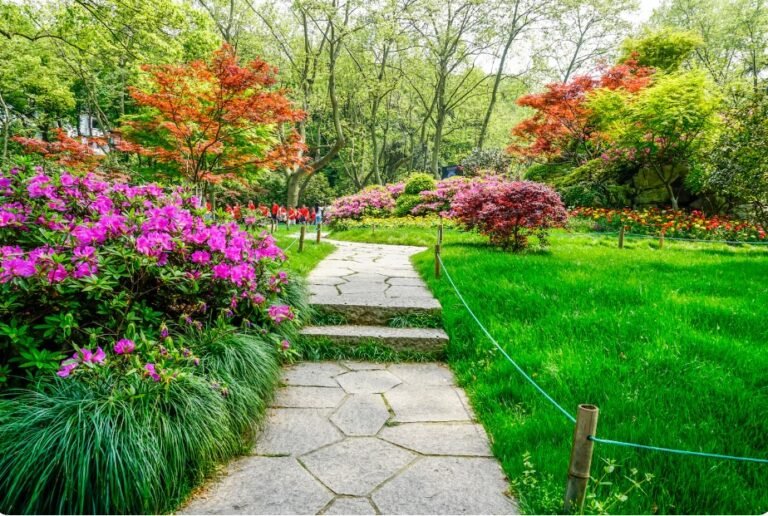
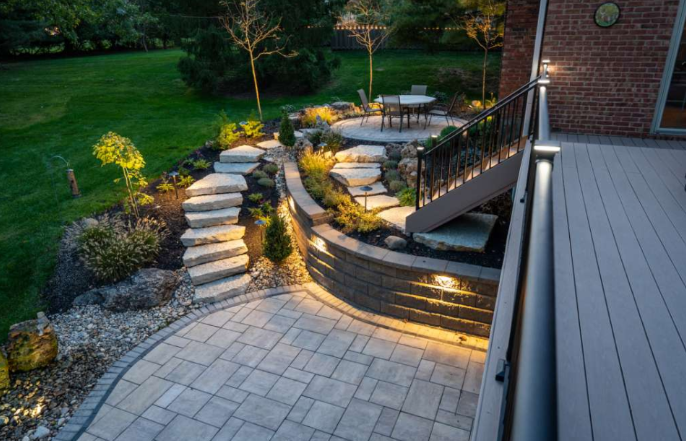
A retaining wall holds soil in place — that much is obvious. What is less obvious is what gets created in the process. Many Cincinnati properties sit on ground that slopes, dips, or simply refuses to offer a flat, usable surface. Once a retaining wall defines that space, a previously awkward slope becomes a level terrace where furniture can actually sit without wobbling. A garden that felt shapeless suddenly has structure. The wall itself, when built from natural stone or quality textured block, adds a visual weight and permanence to the outdoor space that planted borders simply cannot replicate. It is one of those changes that makes people wonder why they waited.
The Maintenance Shift
Grass demands consistent attention through the growing season — cutting, edging, feeding, and dealing with bare patches after a dry stretch. Mulched beds need refreshing regularly. The time commitment adds up, particularly for households where weekends are already pulled in too many directions. Hardscaped surfaces ask for very little in comparison. A sweep, an occasional rinse, and some jointing sand topped up every few years. That reduction in upkeep is not a minor perk — for many homeowners it is one of the primary reasons they made the change, and the relief tends to be immediate.
How Buyers Read Outdoor Spaces
Estate agents knowledgeable with the Cincinnati market will say the same thing regularly. A organised outside space — a paved patio, a constructed pathway, or a designated fire pit area — suggests to purchasers that the home is finished and thought thoroughly. An open lawn symbolises opportunity, which sounds nice but typically implies a buyer is mentally pricing up the work they would ultimately like to perform. Hardscaping removes that calculation. It provides something complete, something that does not require imagination to enjoy.
Conclusion
Hardscape in Cincinnati makes sense for practical reasons before aesthetic ones. The climate puts outdoor surfaces under genuine stress. Many local properties have terrain that creates real drainage and usability problems. Structural outdoor design solves both directly. Homeowners who treat it as a long-term fix rather than a cosmetic upgrade consistently find it holds up — not just visually, but in the actual daily experience of using the space through every season this city throws at it.